



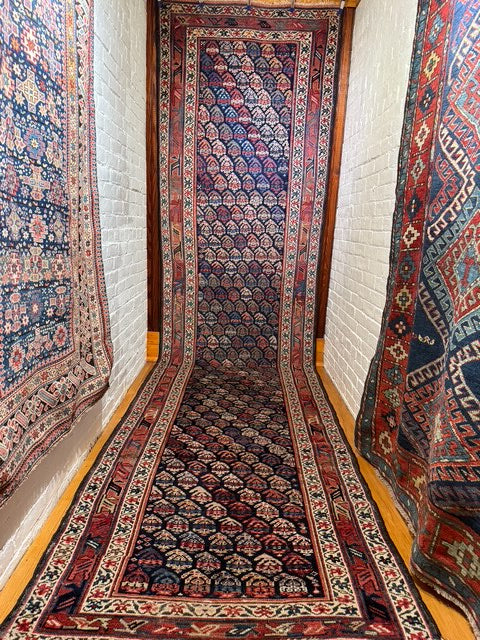

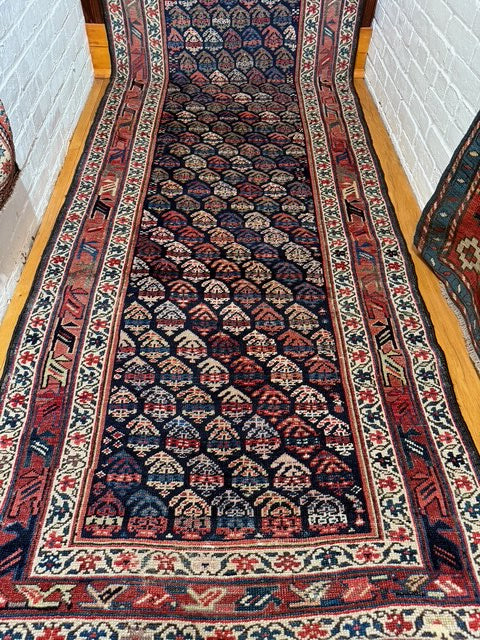

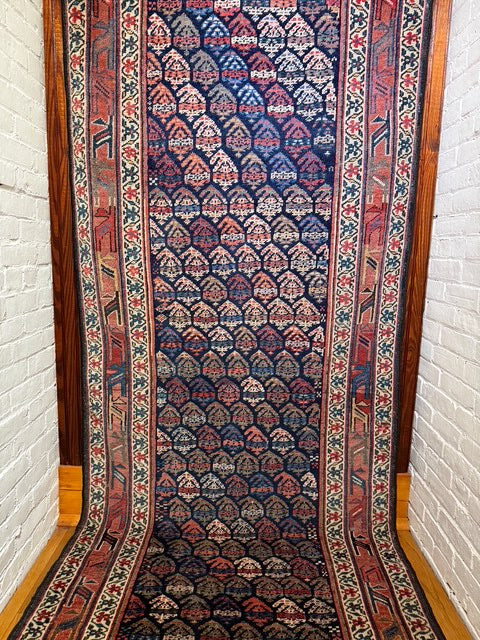

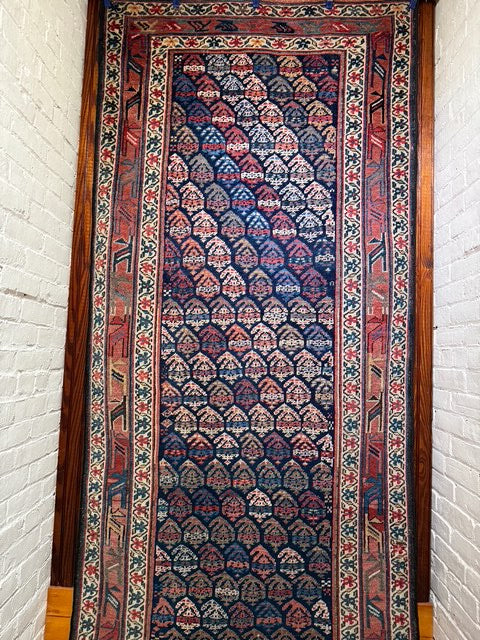

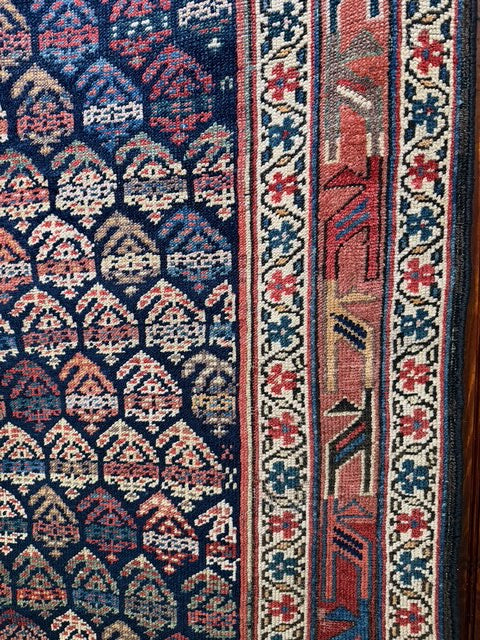

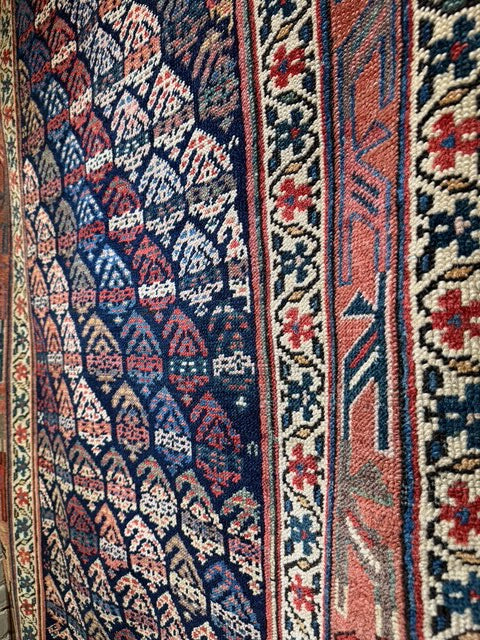

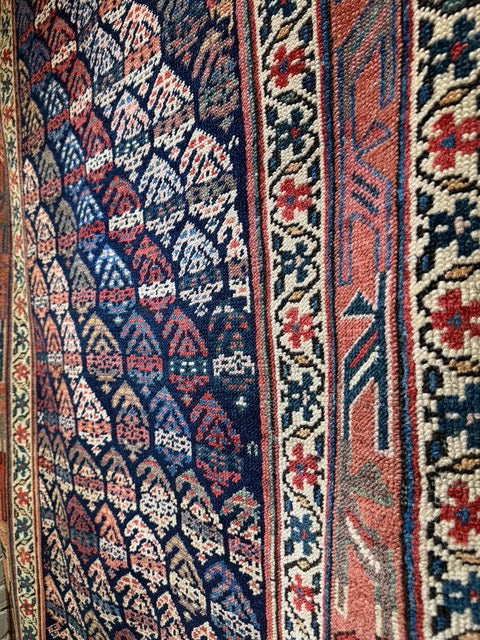

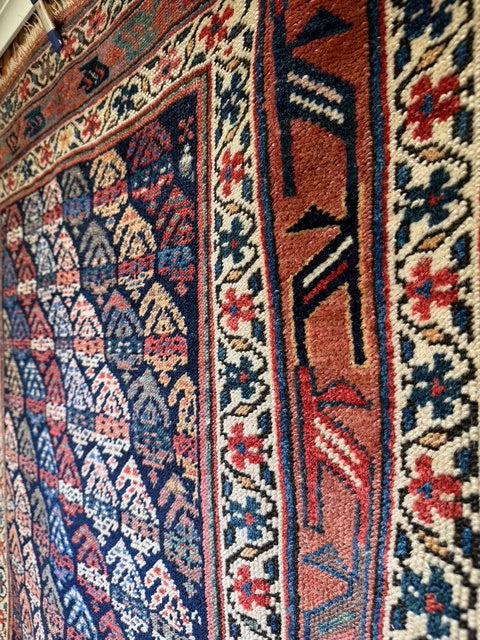

Dagestan Long Rug [SH-376]
$0.00
In the Markarian album, Richard Markarian exclaims, "Isn't this a beauty, a real old one?" Look at the border designated as the Dagestan Southern Caucasus, pg 236 Dagestan. On page 70, plate 32, an introduction to Kurdish rugs, William Eagleton states, "A central design is a Kurdish favorite, but also appears in caucasian Karabaghs and Gendjes. The Iranian side of the border? The weaver could be a Kurd or Armenian of the Caucasus. Elsewhere, it was described as a flower vase. The long rug we illustrate shows a fourth stem at the top, creating a boteh or dragon. Dwelling in a kaleidoscope of saturated, natural-sourced dyes. We find one or more criciforms embedded within and radiating upward. Eagleston's suggestion of an Armenian weaver favoring this design fits.